Showing posts with label business blogging. Show all posts

03 December 2012

Blogging for beginners kit Christmas promo


We are nearing the end of 2012 where people are winding down and getting into the holiday spirit.  For me, it’s the best time of the year because the holiday means spending time with friends and family. It’s also a time where great promo’s can be found if you know where to look for them. With that said, we are excited to announce our “Blogging for beginners kit” promo where you can get your hands on a great SEO optimized blog for low price so that you can enter 2013 with a bang for your business.
Blogging is a great social media marketing medium and with this promo you can start 2013 on a high note! This promo includes the setup of the blog, the theme, and an hour training (optional) to get you up to speed in the blogosphere. It’s really easy to get started with blogging and in my opinion, a must for every business that wants to take social media to the next level.
What are the benefits of taking this special offer?

Benefits of the blogging for beginners kit

  • Search engine optimized blog – SEO;
  • A simple and clean design;
  • Hassle Free Blogging Start up;
  • No Limit to your pages/posts;
  • Low cost to maintain;
  • Easily be found online by your clients or audience;
  • Be viewed as an expert and a market leader by your readers;
  • Improve your website rankings;
  • Add a human face to your company and create a corporate personality
  • Link to your Social Media platforms such as Twitter, Facebook and YouTube;

Included in the blogging for beginners kit

  • 5 Page Business Blog Content Blueprint;
  • Hosting included for 6 months;
  • Business Blog fully set-up;
  • Dedicated links page;
  • Keyword analysis;
  • Blogging Tips;
  • Social media bookmark buttons built in;
  • Blog RSS feed submitted to 5 blog aggregators;
  • Website analytics to view user statistics;
  • Twitter account with automatic Tweeting of your blog posts (* optional);
  • Up to 30 minutes training  (* optional);
If you require more information on this exciting promotion, visit this page Blogging for beginners kit or contact us for all the information.

30 November 2012

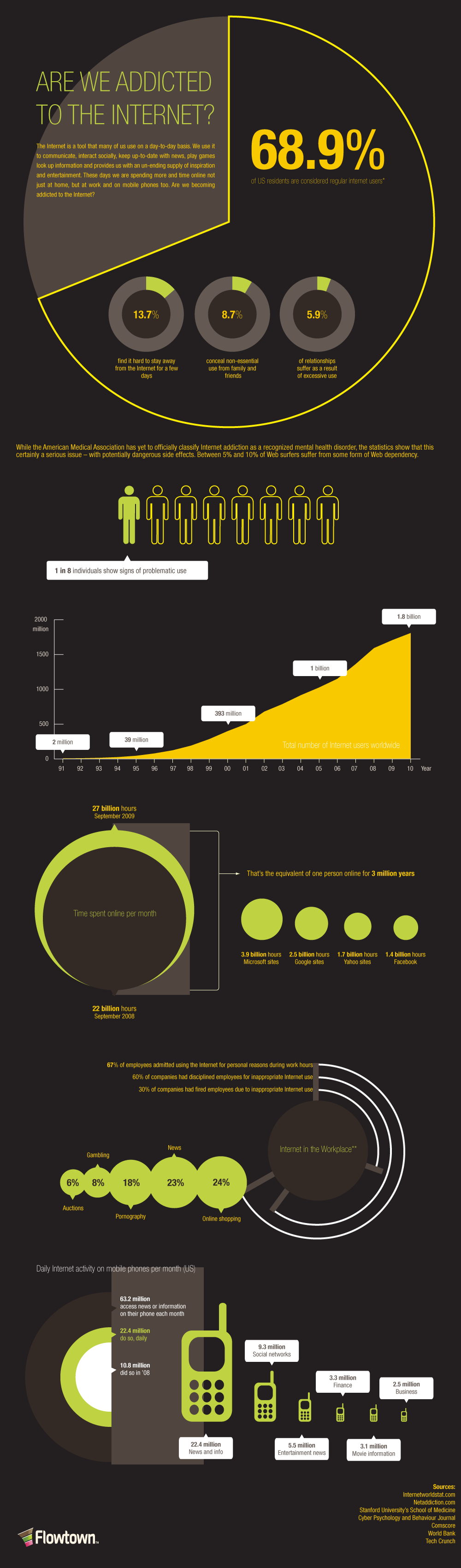
Are We Addicted to the Internet?


The Internet has brought media to a global audience. The interactive nature ofInternet marketing in terms of providing instant responses and eliciting responses are the unique qualities of the medium. Internet marketing is sometimes considered to be broad in scope because it not only refers to marketing on the Internet, but also includes marketing done via e-mail and wireless media. Management of digital customer data and electronic customer relationship management (ECRM) systems are also often grouped together under internet marketing. Here’s an infographic I came across on flowtown.com.

Are addicted to the internet? (Click to enlarge)

03 October 2012

7 Editing Tips to Improve your Blog-Writing Skills


You can have hundreds of websites on the internet, but if nobody knows about you, you are invisible. A well-planned, creative online marketing campaign can put you out there for the world to see and instantly increase your sales. Now with that said, you will at one point need a blog in order to improve your online visibility. Take a look at these tips below fromsocialmediatoday.com.
Developing your blog-writing skills is a slow process. Work on your technique continuously and your work will attract readers. Take in readers critiques for they know best how well you are passing on your thoughts. Neglecting the editing aspect of blog-writing will deter your readers from your blog.  Here are the reasons why writers need to edit and how to edit your blog articles.
think_and_blog.jpg
Let’s start at the basis of why writers need to edit.
  • Inspirational chaos. Say you came across an amazing idea for a blog article that you know and feel will bring in traffic from the web. Then you start typing away with no end in sight. I like to call this ‘verbal/written diarrhea’ where your words just flow in every direction. Editing will help your thoughts come together in the end.
  • Diverse ideas. Writers tend to get lost in their sentences or words and don’t take the time to double-check if their sentences would make sense to a reader. People may capture your writing differently than you had thought. In the creative process ideas get intertwined which can cause for messiness and a blog article that isn’t easy to read.
  • Grammar and all that other stuff. Editing as you write never works out!  Take your time to edit your blog article after you have finished. We all miss one or two words when editing – sometimes we don’t even notice when we press the wrong key so spell-checking and revising each article afterwards is a must.
  • Oh, you speak English, too? Even if you consider yourself an English-native speaker – edit your articles. Just because you were born into the English language and learned about it all your life doesn’t mean you won’t make any errors (it’s very naïve to think so).  
Follow these 8 simple tips to when editing your work that promise great writing skills for future blogs:
    1. Take a breather after writing. The first mistake writers make is editing their post right when it’s done. Writer’s thoughts are fresh in their heads and when re-reading their article they might not pick up on the errors right away. Giving yourself time will put you in the reader’s seat without prejudice to your own work.  You won’t remember why you chose that exact word over another. This is the only time I recommend distractions: TV, music, Facebook, what have you. The key is to focus on unrelated things then come back to your article.
blogging_writing
  1. Divide and Conquer. Divide your editing into three processes: content editing, structure editing, and grammar editing. Being more specific while editing will help you focus on specific grammatical errors. Again, take your time.
    -Edit content. Review your article keeping an eye out for sections that don’t make sense. Look for unfinished paragraphs and fragments. After identifying them, work towards fixing the errors.
    -Edit structure. Write your articles in a way that the reader will be able to follow your content. Structure your content using bullets or bold headers.
    -Edit grammar. Lastly, edit grammatical errors. This shouldn’t take more than 10-15 minutes for a 800-900 word article.
  2. Less is more. When it comes to words – less really is more. Don’t use complicated jargon unless your blog’s audience understands the lingo. Readers know when you have used the same words and are saying the same thing again. Remember the reader is smart – don’t underestimate their ability to understand your words. Adjectives and adverbs can confuse and distract readers. Keep overused words such as “definitely,” certainly,” “really,” etc. out of your article.
  3. Don’t trust Spell-check. Trust your spell-check software lightly. These tools don’t “understand” yourkeyboard_writing writing and don’t grasp variations of sentences or word usage.
  4. Read at random. Choose a random paragraph from your article and edit it. Then choose anotherrandom paragraph and edit that one. Do so until you have finished editing them all. I know you’re asking yourself why? This tactic stops you from reading in “autopilot.” You wrote this article so you know what’s coming next and you may miss obvious mistakes.
  5. Don’t overdo it. What’s harder than actually starting the editing process? Knowing when you’ve had enough. No sense beating a dead horse. If you find yourself rewriting the same sentence over and over then you should call it a night. Reaching the publishing stage is stressful, but don’t let your indecisive editing keep your article in the drafts folder.
  6. Learn from your mistakes. After following the steps above, you will be closer to a perfectly written masterpiece. Learn from the mistakes you picked up in the editing stage. Analyze what you’ve done wrong and practice to get to your goal writing style. When you write your next article make a list of your mistakes along with your corrections. This will help you remember your mistakes and hopefully not repeat them.
I hope you find the above tips as useful as I have. There are free online tools such as After the Deadline to help with editing. This tool has helped me shift from writing in a passive tone to a more active tone. What actions to you take when editing a blog article?

05 September 2012

4 Blogging Tips to Double Your Site Traffic


Did you know that you can use yourbusiness blog for branding and it also establishes you as the authority in your niche? Blogging is an interactive method that will allow you to reach your target audience. This can include using the blog for website traffic, reaching new customers, branding, and it can be used as a communication medium. take a look at these tips below from SocialMediaExaminer.com.

Jason Crawford, president of the Parts and Service division of Block Imaging, was upstaged by his six-year-old daughter.
In her ponytailed debut on the Block Blog, Crawford asked her, “Madeleine, do you know how to fix a laser aimer?”, to which she confidently replied, “Yes!”
The pair then demonstrated with charming aplomb a simple troubleshooting tidbit for Block’s medical imaging equipment customers.
The video was one of a slew of ideas that came out of a two-day retreat aimed at kickstarting a company-wide commitment to content marketing through their blog.
Since then, Block has seen an increase of approximately 150% in organic search traffic to their site, which has translated to more and better-qualified leads and shorter sales cycles.
Sales volume has increased significantly enough since September that the company—which had been in a slump—hired 13 employees, including 3 additional salespeople.
Organization: Block Imaging International, Inc.
Social Media Handles & Stats:
Highlights:
  • Organic search traffic increased from 4,000 to approximately 10,000 visits per month
  • single post was the impetus for a $70K order
  • Three new salespeople hired since the company-wide commitment to blogging
  • Over 250 downloads of The C-Arm Buyers Guide in its first 3 months
visits organic searchBlock’s search traffic increased significantly after a September 2011 company retreat focused on content marketing.
Block Imaging, a 70-person company in Lansing, Michigan, provides preowned and refurbished medical imaging equipment, including machines for MRI, CT, X-ray, C-Arm and mammography, to a worldwide market.
Their sales growth over the past year is to a great extent directly attributed to theirfocus on content marketing through their blog.
Four factors have contributed most to their blog’s success.

#1: Buy-In From the Top

The atmosphere at Block Imaging in summer 2011 was fearful and distrusting; sales were down and every department had scaled back.
Vice President of Marketing Krista Kotrla articulates that they had two options: “Are we just going to accept this not being a good year and cutting and scaling back on everything, or are we going to go all-in on something to try to grow this business?
She had experimented with getting a blog going the previous December, but participation and results were spotty. “It was kind of relegated to the marketing department trying to get an article from the company president maybe once or twice a month,” she said.
Kotrla proposed a two-day company-wide retreat with a content marketing specialist to launch what she calls a “culture of content marketing.” Response to the retreat was extremely positive, generating a host of ideas for blog posts and videos such as the one Crawford made with his daughter.
“I had never written a blog before, and I had never done a blog video before, but I figured we’ve got to start somewhere,” Crawford said. “It really came down to being willing to be a little vulnerable and a little real with people.”
blog title brainstorm team competitionBlock Imaging employees in a team blog-title brainstorming exercise at their company retreat.
“It was a definite intentional shift from leadership saying that this is the way we are going to go, this is the wave of the future,” said Product Manager Chris Sharrock.

#2: Make it Easy for Everyone to Contribute

There is no one-size-fits-all strategy at Block for coming up with content. Sharrock dove in wholeheartedly, and has no problem consistently cranking out two to three blog posts a month, but some others have needed a little more help and encouragement.
Some people can take a list of keyword phrases that marketing has gleaned from Hub Spot and run with it; others work better with a specific blog post title. Others are more comfortable verbally. “Some salespeople feel much more comfortable standing in front of the backwall we set up in the conference room and filming a short video,” Kotrla said.
And if there is someone who hasn’t sent any submissions in a while, “We pull them aside and in a one-to-one meeting, try to figure out what they need,” she said. “Is it more keywords, specific titles? Sometimes they just need permission to stop the daily grind and sit down and talk it out. Other times, they feel more comfortable if they know it’s being reviewed by an engineer, so we’ll take a salesperson and an engineer out to lunch and flesh out a few outlines.”
Block’s ambitious goal of one post every weekday means managers must keep on top of department quotas, but they find that an atmosphere of inclusiveness and flexibility has far better results than reprimanding people for not participating. To date, over 40 people from the 70-person company have contributed to the blog.

#3: Empower a Content Officer

One strategy that has helped tremendously is to have a single point of contact for all blog drafts, someone they have taken to calling the “Content Officer.”
Jordan Batterbee, originally from engineering support, emerged as a natural writer who can take a draft, outline or even a list of bullet points from another team member and craft it into a well-edited, SEO-keyworded post, injecting some humor and personality along the way.
jordan batterbeeJordan Batterbee, Block Imaging’s Content Officer
Having him as the conduit for all posts has been “hugely significant,” said Kotrla, “Because it made it a lot easier for people to contribute very little and turn it into a post that they get recognized for. It makes it easy and comfortable for people to participate.”
Batterbee has increased his contribution to the point that he is about to move over to marketing full time. “I wish we had invested sooner in developing a dedicated person to carry more weight in helping to oversee our blogging machine,” said Kotrla.

#4: Make it Fun and Rewarding

The one factor that ties everything else together is consistently celebrating and rewarding contributions to the company’s content marketing, creating an environment where employees are intrinsically motivated.
“Every two weeks at the staff meeting, we reward two content superheroes who have contributed something significant to the blog. We have a Spiderman mask and a Wolverine mask that they put on and we take a picture that we share in the next all-team PowerPoint presentation,” said Kotrla.
superheroes chris and shelly rTwo of Block’s biweekly Content Superheroes.
“We also have a really cheesy Plinko board with gift cards at the bottom, so they get a gift card, too. But it’s not really the gift cards, it’s the fun of knowing that you contributed. We try to inspire in the team that all of their efforts arecontributing in a significant way to the overall company vision.”
But besides the chance to unleash their inner superhero, the biggest motivator for Block’s employees is success.
Said Crawford, “When we get feedback when someone says, ‘Your answer to a common question helped me make a better decision,’ or when people begin to see that they helped someone get a better result or find an answer to a problem they were having, that’s a great feeling that people want to experience again and again.”
What do you think? Does your company have a blog? What strategies are succeeding or not succeeding in your content marketing? Leave your comments and questions in the box below.

03 September 2012

Business blogging for lead generation


Businesses blogging has become the heart and soul for many business Social Media Marketingcampaigns. A business blog marketing strategy can get faster results than traditional online marketing and many businesses online are taking advantage of this opportunity to use this method as their main online marketing strategy.
How business blog marketing works is that it uses blog posts to advertise their services, products, and website to the online world. In plain English: business blogging is simply a way to market your business on the social web using your blog. Many businesses has a website, but not all of them are using a blog for marketing purposes.

Blogging for branding

Did you know that you can use your business blog for branding and it also establishes you as the authority in your niche? Blogging is an interactive method that will allow you to reach your target audience. This can include using the blog for website traffic, reaching new customers, branding, and it can be used as a communication medium.
Business blogs are the newspapers of the future and has become quite an important medium on the web. In my experience, blogging is also one of the best ways you can use to publish new news that can be spread like a virus online. More and more people are reading blogs everyday to find out information and if they are looking for an answer to their problems. This shows that blog readers are early influencers and adopters. People who read blogs are more likely to take an action when they have found what they are looking for.
Using business blogging for lead generation is a very similar to marketing with an enewsletter. With both you can build relationships with your customers and credibility. Do you have any success stories with blogging?

30 August 2012

Blog Marketing Strategy: 7 Steps to Social SEO Success


Content marketing should not just be seen as placing random articles of text on your website and blog with the hopes of getting attention. If you can create quality content for your target audience that catches the attention of interested people, and they decide to share the content with their own community and network, you have succeeded in creating good content that will work for you. I found this article below on toprankblog.com, have a look.
All marketing efforts should start with a goal and means for measuring success, so I do not get into specifics on those tasks in this list, but focus more on the content and promotion.

1.  Social SEO Personas

Personas Social Media SEO
While blogging evolved out of personal expression, business blogging is less about corporate egocenticism and more about empathy with customers. Customer centric content for blogging is more relevant and does a much better job of engaging. In the way that direct marketers segment customers by key characteristics, online marketers that blog can create buyer personas to create more relevant experiences for their readers.
Personas are customer profiles (preferences for information discovery, consumption & sharing) that represent groups of customers that a brand wants to engage and do business with.  Information from Personas drives keyword research & optimization, content plan and promotion. More about persona creation here. So one of the first things a blogger should do after defining objectives and general audience, is to understand who they’re trying to reach by developing personas.
Collect data through reader / customer surveys, analytics, social monitoring and other tools to form a profile. That profile represents topics, behaviors and preferences that can translate into search keywords, social topics, social channels, editorial calendar and promotion plans.

2.  What is your unique selling proposition?

USP - unique selling proposition
When people (or search engines) visit your website, is the primary topic crystal clear? With the increased competition in search and for attention in social conversations, it’s essential for blogs to stand out.  Being able to articulate your Unique Selling Proposition helps distinguish your content the value of your blog content for people and search engines. The screenshot above shows a blog that is crystal clear in it’s focus. The result is reflected both in popularity and search visibility (#1) for highly competitive phrases like “digital photography“.
Developing a Unique Selling Proposition for your blog (h/t SEOBook) is pretty straightforward: Identify the key benefits of your blog’s content and how you will address customer/reader pain points. As you communicate your USP, be specific, concise & show proof. It’s also important to live your USP so that it’s a key component of your messaging.

3.  Search & Social Media Keywords

Keywords SEO Social Media
Personas and your USP represent the intersection of customer interests and the goals for your blog. In order to activate your blog content for effective discovery via search and social media channels, it’s essential to create a search phrase keyword glossary for Search Engine Optimization purposes and a social media topic glossary for Social Media Optimization.
SEO Keywords: Resources like Google’s keyword research tool are a great start for finding which words and phrases are in demand, relevant to the content you’re publishing on your blog. It’s tempting to be egocentric and use whatever language you want, but if there is an expectation to attract significant search traffic and an interest in using language that resonates with a community in search of what you have to offer, keyword optimization of content is very appropriate.
Social Topics: Social topic tools that work like a SEO keyword tool are very rare and a to really get into useful source information, there’s a lot of manual research necessary. However, to get started, tools like socialmention.com offer a list of social keywords (bottom left of search results page) that can be downloaded as a CSV file for use in your Social Topic Glossary. Social keywords represent topics of interest to the people your blog is intended to reach and engage. By researching these topics and the specific language the community uses to express their interest, your blogging can be more effective at being relevant and shared on the social web.
The SEO Keyword and Social Topic glossary provide guidance towards editorial plans and specific phrases/topics can be mapped to content for search and social media optimization. It’s a great management tool that keeps SEO and SMO efforts accountable.

4.  Create a Content/Editorial Plan

Editorial Plan
Keywords inform content and documenting an Editorial Plan for your blog can ensure that content is true to the goals of the business and interests of the community that reads it. An content plan also offers ideas and guidance, months in advance, which is priceless when bloggers hit creative roadblocks. This is inevitable, and after 7+ years of blogging myself, I can’t vouch enough for the guidance of an Editorial Plan.
Keep in mind, such a plan is a guide – not a set of hard and fast rules.  It’s effective to schedule recurring themes with posts, like “Thought Leadership Monday”, “Practical Tips on Tuesdays”, “News Roundup on Fridays”. But it’s also important to allow for wildcards, because opportunities will come up spontaneously based on events within your company or the industry that require blogging. And you don’t want to delay publishing important news or a reaction to news, just because it wasn’t planned for that day.
The Editorial Plan defines the application of keywords in topics to be covered, categories, titles, tags and how/where/when the posts will be promoted. It also allocates for the future repurposing of appropriate blog posts.

5.  Search & Social Media Optimization

SEO Social Media Optimization
Optimizing content for search on websites like Google and optimizing social content for ease of discovery and sharing within social channels is essential for reach and engagement of blog content. Optimizing for search & social media is the one two punch of blog marketing. If SEO efforts are initiated with an existing blog, then a SEO audit would be completed, including a review of the blog templates and configuration, existing content, internal links and links from other websites. If you’re starting a new blog, then SEO would be baked in to the editorial plan via the keyword glossary.
Optimizing for search is about helping search engines do a better job of connecting readers with your content. It’s not about tricks or manipulations. It’s about providing search engines and people what they need to find, consume and be inspired to share your blog content.
Optimizing for social media is about search as well, as in the search that’s possible within Facebook, LinkedIn, Twitter, YouTube, etc. But SMO is also about optimizing content editorially to resonate with social audiences. It’s about ease of discovery and sharing through things like feed distribution and widgets that make it easy to ReTweet or post to the reader’s favorite social sites.
SEO and SMO are about making life easy for both search engines and people to connect with, interact and share your blog content.

6.  Links: Internal and External Acquisition

SEO Link Building
Links between pages and links acquired from relevant websites in the industry provide a good user experience and strong signals for search engines when they crawl, index and rank web pages. Following best practices for internal linking is one of the most impactful things a blog can do to help website realize SEO benefit.  For example, a tips blog that cross links the keywords relevant to specific products being sold gives readers and search engines a quick and relevant way to move from editorial about how to use and get benefit from a type of product to a page that actually sells the product.
Attracting links from other relevant websites as pictured in the diagram above is essential for attracting new visitors to your blog, directly and indirectly because of the effect relevant links have on search engine visibility.  What’s important to remember is that links to your blog home page are important, but relevant links into specific category or individual blog posts is essential  External link sources that are relevant to broad topics that link to your home page or category pages provide the user (and search engine) with a very relevant connection.  Links from niche sites to your specific blog posts do the same.
There are myriad ways to attract links for blogs ranging from commenting and guest posting to creating content that attracts links from other bloggers and the media.

7.  Content Promotion

Content Promotion
Content isn’t great until it gets shared. A lot. That doesn’t mean a blogger should aggressively promote every post. It does mean that when a particular post is especially promotable (you would know this because you planned for it in your Content Plan) then it warrants special attention.  Blog content can be promoted in a variety of ways and effective promotion is tied to the quantity and quality of the networks you’ve built. That includes readers and subscribers of your own blog, an email list, Facebook Fan page, Twitter, LinkedIn and other relevant sites where people with common interests interact and share.
Some content promotion is automatic, like RSS feeds, syndication of blog posts to Twitter, Facebook and LinkedIn or content syndication partnerships. Other content promotion might be tied to the content itself, like using industry thought leaders to crowdsource insights into a topic (your keywords) of importance to your readers. Those participants will often help you promote the post. You can also reach out to your network and suggest or share relevant posts they might be interested in. Commenting and being social on/offline are also effective promotion methods.
The bottom line with content promotion is that great content that isn’t promoted vs. mediocre content that is promoted in a relevant way, will often lose in terms of traffic and therefore meaningful engagement with a greater number of readers. The amount of content being published on a daily basis creates levels of competition never before experienced, so promotion is essential to stand out and get noticed. But it has to be content that’s WORTH promoting.
Summing it all up.
The implementation and refinement of these steps is a work in progress. The web continues to change in terms of technology and how people use it. It’s essential that companies follow an adaptable online marketing strategy when focusing on the social web and search engines. Opportunities will reveal themselves in web analytics and social media monitoring and the promotion efforts outline above apply to those real-time marketing situations just as well as tasks included in a Content Plan. Hopefully these guidelines are useful to you and if you need more specific information, you’ll likely find it in blog posts we’ve published in the past. At TopRank Marketing we do this kind of consulting on a daily basis so there’s a lot of rich information published in our archives.
What other types of insight about blogging and blog marketing would you like to see? What are some of the biggest obstacles you’ve had (and maybe overcome) when it comes to implementing blog marketing tactics like those mentioned in this post?

15 August 2012

7 Ways to Drive More Blog Traffic Using LinkedIn


The Internet has brought media to a global audience. The interactive nature of Internet Marketing in terms of providing instant responses and eliciting responses are the unique qualities of the medium. Blogging can be used for a lot of things but if you use wisely, you can utilize it to promote yourself on the internet. What we can say with certainty is that it is one of the most effective methods of reaching out to readers. Have a look at this article from SocialMediaExaminer.
Want more people to read your blog?
Are you fully leveraging LinkedIn?
Many business bloggers neglect one of the most powerful social networks for growing visibility and traffic. LinkedIn is THE professional web.
If you are a business owner or entrepreneur, or a working person who is blogging, you should consider LinkedIn as a valuable place for getting more exposure.
Keep reading to discover seven powerful tips to use LinkedIn to drive more traffic to your blog.

LinkedIn Profile Views Drive Blog Traffic

Your LinkedIn profile can serve as one of the most important referral sources for your blog.
If you consider that significant blog traffic from LinkedIn can come directly from LinkedIn profile views, it makes sense to work to increase your profile views.
Fortunately this is something you can measure.
LinkedIn will display the number of times your profile has been viewed. Keep track of this each week and as you implement the steps below, most likely you will see this number consistently rising.
profile viewsIf you are active and engaged on LinkedIn, members are going to click through to view your profile.

#1: Add Profile Links

Your LinkedIn profile is where members are going to land to learn more about who you are, what you do and whom you help.
From your profile, the most natural next step that members will take if they are intrigued or interested in what they see is to click through one of the links that you showcase on your profile under Websites.
web linksGet creative with your LinkedIn profile website links.
Showcasing descriptive and interesting links on your LinkedIn profile will encourage visitors to click through!
You can link directly to your blog homepage, or you can link to specific landing pages on your blog where you provide a special offer to potential subscribers.
Regardless, make your link descriptions compelling and don’t be afraid to experiment!
Given that your LinkedIn profile serves as the “gateway” to your primary web presence, it is imperative that you have a powerful LinkedIn profile. Learn more about how to enhance and improve your LinkedIn profile.

#2: Build Connections to Boost Your LinkedIn Profile Views

I recently invited someone in my industry to connect. We had a few connections in common and we run similar, perhaps even complementary, businesses. When she received my invitation, she responded with “I limit my LinkedIn connections to people I know personally.”
This is certainly your decision, but I firmly believe that if you limit your connections, you limit opportunities to expand your visibility. Don’t be fooled into thinking that you should only keep a small number of first-degree connections on LinkedIn.
If you want to grow your visibility on LinkedIn, connect with anyone who presents a good reason for connecting!
As you grow your connections, your updates on LinkedIn will be visible to more people.
Remember that every time you update your status on LinkedIn or participate in any activity on the network, that update shows up on the homepage of each one of your connections. If your connections engage with the update, it will be visible to their connections.
status updateThis is how my status update appears on the homepage of one of my connections.
Furthermore, be consistently visible and valuable, and the members in your extended network will click through to view your profile in order to learn more about you.
By growing your LinkedIn connections, you have the ability to expand your visibility exponentially. You will also increase your LinkedIn profile views, which in turn can increase traffic to your blog.
Don’t limit your opportunities for visibility and traffic by limiting your connections. Instead, always be connecting. Consider these creative methods for growing your connections.

#3: Get Active and Engaged to Drive LinkedIn Profile Views and Blog Traffic

It doesn’t take much activity to stand out on LinkedIn. All you need to do is spend a little time on the network.
Every action you take on the network will show up as an update on the homepage of your connections. If you’re active, some of your updates may even show in the “Network Update” that LinkedIn sends to members via a weekly email.
Examples of LinkedIn activities that will get visibility:
  • Update your profile
  • Post a status update
  • Participate in a group discussion
  • Comment on someone else’s status update
  • Post to your LinkedIn company page
  • Answer questions in LinkedIn Answers
answering linkedin questionsAnswering LinkedIn questions can position you as an expert and grow your visibility.
Ideally, visiting LinkedIn a few times a week to post interesting and compelling status updates, join in a few group discussions and answer a question or two will keep your profile active. Do not forget to engage with connections as well.
Leaving comments or sharing what your connections have posted can also lead to profile views.
Commenting is a very effective way to start dialogue with first-degree connections and beyond. When you leave a comment on someone else’s update, the conversation will show up with your picture in the homepage of all of your connections. It will also show up on the homepage of that person for their connections to view.
Commenting is a great way to gain exposure to your second- and third-degree connections while engaging in conversation.
See the commenting example below.
commentingComment on the status updates of your network connections to increase profile views and visibility on LinkedIn.
I posted a comment on an update that one of my connections had shared. The screenshot above shows what another one of my connections was able to see with regard to the comment and conversation.
Notice that the person who originally posted this status update (Sarah) gets less visibility than I do as the commenter.

#4: Use LinkedIn on the Go

Mobile devices now account for 22% of LinkedIn traffic.
LinkedIn has developed robust mobile applications to make networking on the go easy and fun. When you participate on LinkedIn through your mobile devices you can stay engaged and visible with your connections anytime and anywhere.
ipad appLinkedIn’s iPad application.
Spending time on the network and keeping your profile active is the best way to drive views to your profile and ultimately visits to your blog. A significant percentage of my LinkedIn referral traffic to my blog comes directly from my profile!

#5: Post Blog Articles as Status Updates and Link to Relevant Articles

It goes without saying that to drive traffic to your blog from any social network, your blog posts need to be shared with your network.
  • Manually post a link to a particular blog post in order to pull an image and control the messaging.
  • Don’t be afraid to repurpose your blog posts as status updates from time to time (see image below).
  • Post during high-traffic periods (lunchtime and afternoons).
  • Edit your comments to engage your connections.
repurpose postsAn example of manually posting a link to your blog through a repurposed status update.
It’s also acceptable to post your articles in LinkedIn Groups, but make sure it’s information that will add value to the group, and always include a question or ask for feedback.
Additionally you can point to relevant articles on your blog when participating in group discussions, answering questions in LinkedIn Answers and posting comments on the updates of your connections.

#6: Leverage LinkedIn Tools and Applications

LinkedIn provides a few tools to help you showcase your blog and encourage the sharing of your blog posts to the network.
Install the LinkedIn blog application.
Choose the appropriate blog application to install to pull your blog posts into your LinkedIn profile. This will enhance your profile and showcase your latest insights from your blog.
blog link appsUse one of these applications provided by LinkedIn to showcase your blog directly on your profile.
The blog application will pull in excerpts of your latest posts.
blog linkExcerpts of your latest blog posts are pulled into your LinkedIn profile using the WordPress blog application.

#7: Utilize the LinkedIn Share Button on Your Blog

I’m amazed at how many business-related blogs I see that do not incorporate the LinkedIn Share button as a part of their social sharing tools. Most of the social sharing plugins provide the LinkedIn Share button as an option.
Using the LinkedIn Share button will not only help you get your posts shared on LinkedIn by blog visitors, but that in turn will drive views to your profile and new traffic to your blog!
linkedin shareUse the LinkedIn Share button on your blog to drive shares of your blog posts into LinkedIn.
As you can see, there are a number of ways to integrate your blog more closely with LinkedIn and ultimately boost your traffic.
What do you think? Are you currently taking advantage of any of these ideas? If so, what has worked well for you? I’d love to hear additional creative ideas that I may have left off of the list! Leave your questions and comments in the box below.